Vertical farming has become a recent phenomenon and is now considered the answer over traditional farming methods. The world population now is at an estimated 7.6 billion and by 2050 that number will climb to an estimated 9.8 billion, and as many people may know vertical farming is the next best answer to the ever-expanding future of humanity. Eventually, traditional farming will reach its limit as world population continues to expand. However, vertical farming takes up far less space, up to 95% less water needs to be used, and it can be sustainably powered without the need for expensive farming equipment.
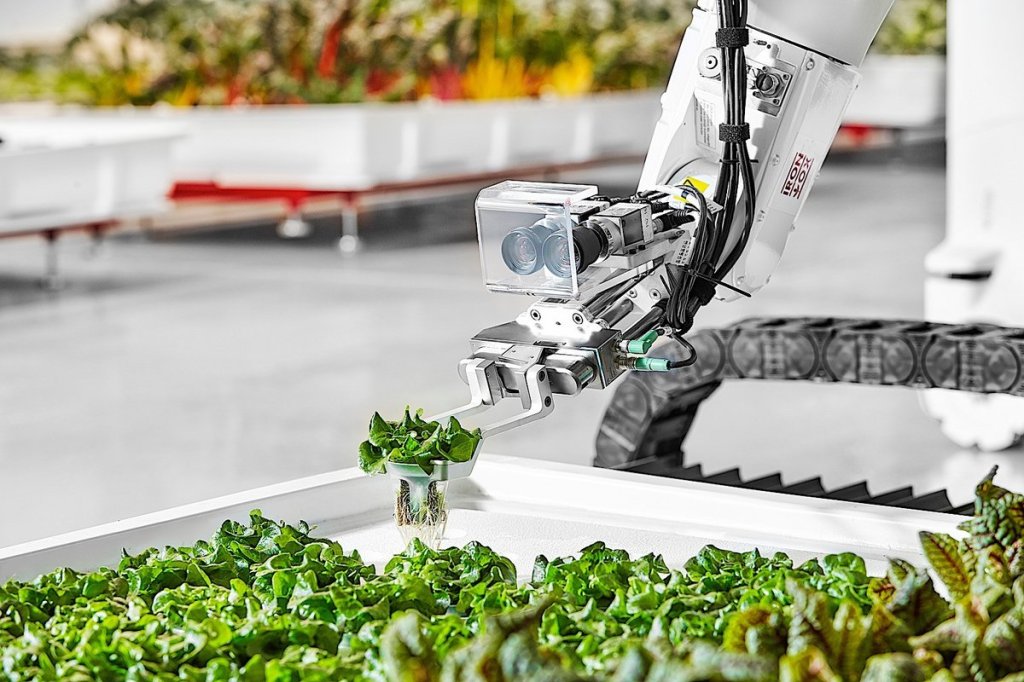
Traditional farms are managed by humans, yet the human variable in vertical farming is looking more and more obsolete. One of the main attractions of vertical farms is their growing autonomy as sensors and systems monitor and manage everything. An IT feature most common in vertical farms today is the use of Controlled Environment Agriculture (CEA) which utilizes many different technologies. One such technology is a sensor which monitors nearly every variable of the farm: temperature, carbon dioxide, oxygen, humidity, nutrients lighting, pH levels, pest control, etc. Sensors can even be used to monitor the condition, or “health,” of machinery within the facility as well as the building itself.
A second component to the CEA system is the use of dosing systems. These systems monitor reservoir nutrient levels and dispense the necessary nutrients into the reservoirs based on its own readings via a pump system. The dosing system also monitors pH levels, EC levels (a fertilizer concentration measurement), and water temperature and is able to balance the solution itself. This saves a bountiful amount of time and worry for the people monitoring plant growth and nutrient levels, again, removing the human element from administering nutrients to plants and letting an advanced system do the work.
Various other factors are involved in this CEA system including various different lighting arrangements such as LEDs, UVs, fluorescents, and high-pressure sodium lights; each light performs its own function whether for sanitization, growing, or the promotion of flowering and fruit yields. Another factor involves the control of humidity and air concentration; CO2 can be injected into the growing operation at specific levels based on system measurements of the building’s atmosphere. Humidity can be controlled to keep levels between a 40% – 50% range depending on the crop; not too little to stunt plant growth and not too much to allow harmful fungi to grow.
As before mentioned, vertical farms can be 95% more efficient in water use than traditional farming methods. This is mainly due to the use of hydroponics, aeroponics, and aquaponics (Piechowiak, 2021), but this is also due to the system in place that recycles water in the vertical farm’s atmosphere. Dehumidifiers and AC units are used to collect moisture from the air within the building, and after being treated, the water is reused in the growing operation.
Possibly what is most important about vertical farming is the data that it produces. Day-to-day operations produce data for the farmers to collect and analyze; this data is then used to help improve effective operations regarding specific crops. This means both the humans and the IT involved are constantly improving. “The growing environment in vertical farms can be constantly monitored, tested, reviewed and improved using predictive analysis.” (Page 8, Gupta & Ganapuram, 2019).
A great example of this Internet of Things is the Bowery which has 4 different locations: 2 in New Jersey, 1 in New York, and 1 in Maryland. CNBC made a great video promoting the company and its high-tech, sustainable, green farming methods.
All of this seems like a lot to take in. Humanity through the 20th to the 21st century has (and is) constantly been expanding in industry and technology and most of us are still catching up to the changing tech environment. Physical aspects of work are becoming more of a past concept and data collection and systems monitoring are becoming more commonplace as job descriptions. The Bowery is one such place demonstrating the removal of the human element, and all of its errors, and shows the introduction of IT and robotic systems as a sustainable and reliable method of farming.
List of References:
Piechowiak, M. (2021, August 26). Vertical Farming Technology: How does it work? Vertical Farming Planet., from https://verticalfarmingplanet.com/vertical-farming-technology-how-does-it-work/.
Gupta, M. K., & Ganapuram, S. (2019). Vertical Farming Using Information and Communication Technologies, 1–12., from (https://www.infosys.com/industries/agriculture/insights/documents/vertical-farming-information-communication.pdf#:~:text=Vertical%20farming%20is%20an%20energy%20intensive%20system%20of,crops%20can%20grow%20well%20without%20any%20agronomic%20constraint.)
CNBC. “Bowery Outperforms A Square Foot Of Farmland | CNBC,” Youtube.com, May 24, 2018, (https://www.youtube.com/watch?v=_BmuxlprjdU)
 Britt's MIS304 Site